
Why Conserve
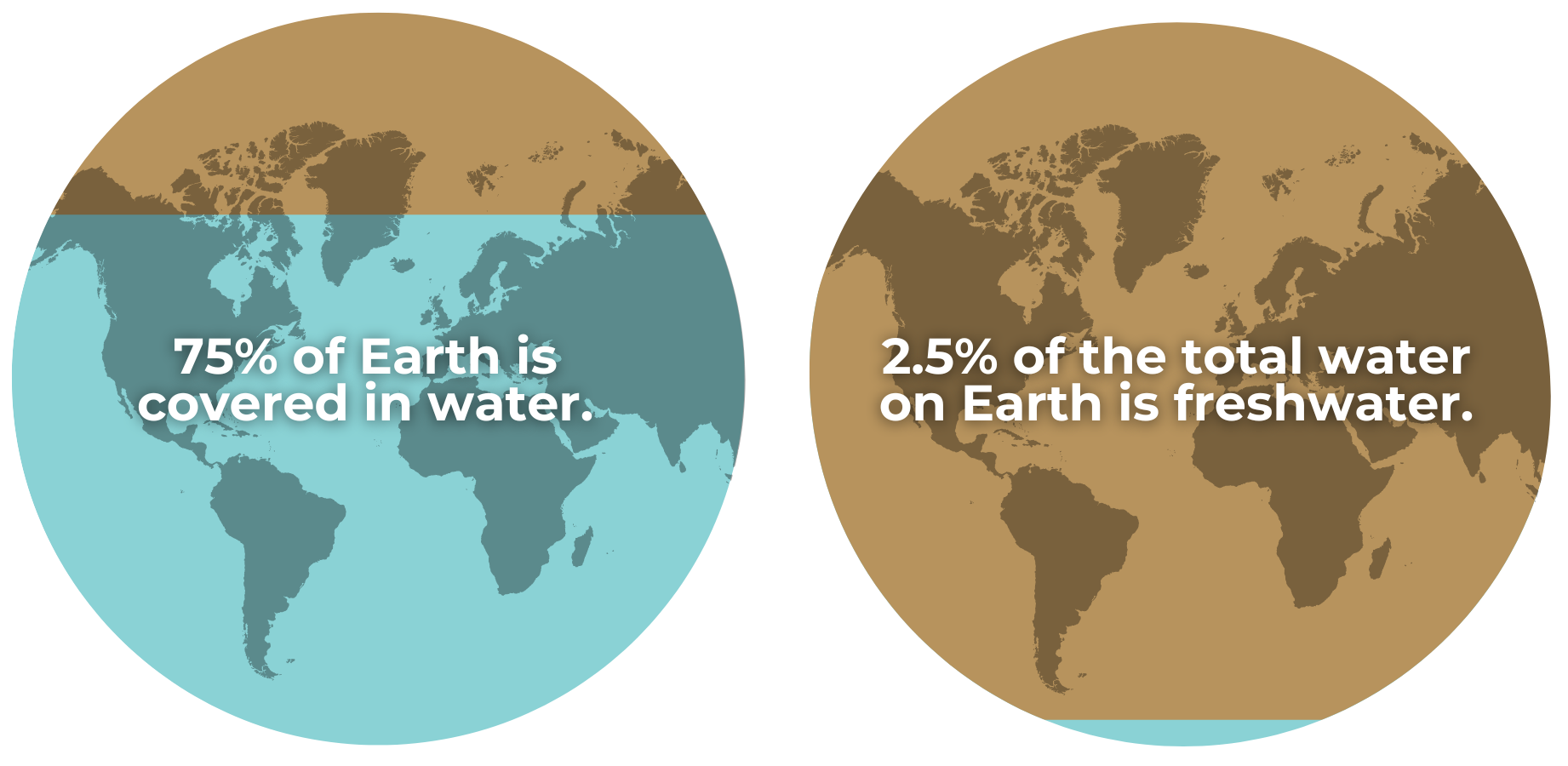
Did you know? Our planet is covered in water, but only a small amount can actually be used.
-
97.5% of Earth’s water is saltwater, which is not safe for us to use.
-
2.5% of Earth’s water is freshwater, which is the kind of water we use; however, most of this freshwater is not accessible because it is frozen in glaciers and ice caps. The freshwater we rely on comes from groundwater or surface water.
Learning how limited freshwater is and what happens when we use too much of it helps us understand why conservation is so important!
Where our Water Comes from
GROUNDWATER
This comes from an aquifer, which stores freshwater underground. Wells are drilled deep down to pump out groundwater for us to use. About 60% of Texas’ water supply comes from groundwater, making it a vital resource to protect.
- It can take weeks, decades, or even hundreds of years for rainfall to reach the aquifer beneath the surface and naturally refill it.
- If we use too much groundwater before nature can refill it, it can lead to serious problems.
Texas has 9 major aquifers made up of different materials, so it is important to know which aquifer your community pulls groundwater from and what can happen when too much water is removed.
For example, communities in southeast Texas pull groundwater from the Gulf Coast Aquifer, an aquifer system made of sand, silt, clay, and groundwater that holds up the land. When too much water is removed from the Gulf Coast Aquifer, these materials compact and can no longer support the land, causing it to gradually sink (subsidence). The process is slow; however, it is irreversible and contributes to infrastructure damage, flood risks, and more, which is why Subsidence Districts regulate groundwater and protect communities from sinking further.
SURFACE WATER
This comes from rainfall that collects in nearby lakes, rivers, and reservoirs. For example, the greater Houston area relies on surface water from:
- Lake Conroe, Lake Houston, Lake Livingston
- Brazos River, Trinity River, San Jacinto River
Treatment plants clean this water and send it through pipes for us to use. If we use too much before nature can refill it, or if there is a drought, our surface water supply can get really low or run out – making communities rely more on groundwater, which can lead to serious problems like subsidence.
Local and regional water providers work to deliver a sustainable surface water supply through special projects. For example, the West Harris County Regional Water Authority, the North Fort Bend Water Authority, and the City of Houston have joined efforts to construct the Surface Water Supply Project. Additional efforts were made at the Northeast Water Purification Plant Expansion near Lake Houston to increase treated water production from 80 million gallons per day to 400 million gallons per day.
As our communities grow, so do water demands. That is why it is important to understand how limited freshwater really is, how water use affects our communities, and the best ways to protect and conserve this precious resource.
Importance of water conservation in our area
Water conservation is the easiest, most cost-effective way for Texans to sustain the region’s water supply as well as the integrity of natural resources and infrastructure. Water conservation is an important tool to make sure we have enough water today and into the future. The Region H plan predicts that in 2070, our biggest opportunity to save water—more than 60%—is related to municipal water conservation. That means the water we use at home and at work matters.
Let’s take charge of preserving this valuable resource by implementing better habits and understanding that water is not a renewable resource but rather a reusable resource that needs to be handled with care. Explore the educational resources on our website to learn more about conserving water!